
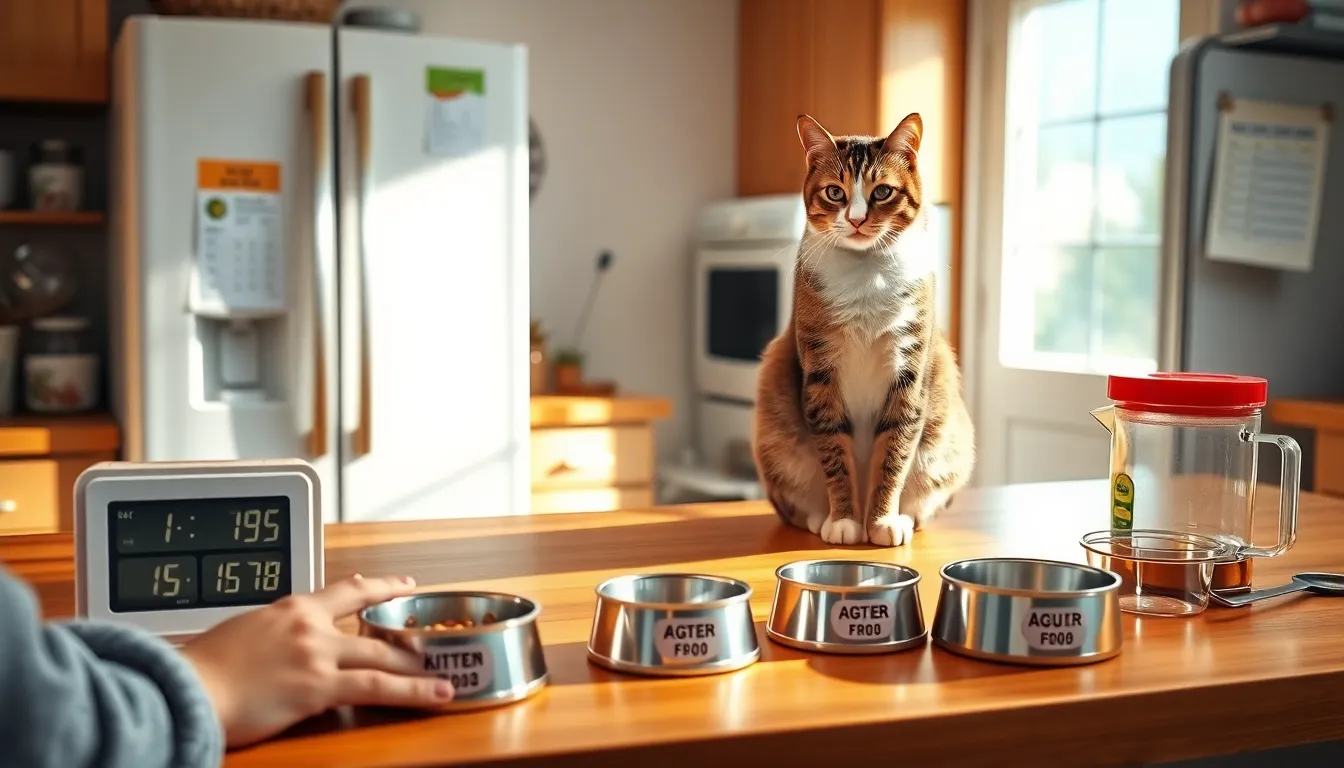
How Often Should I Feed My Cat? Age-Based Feeding
Feeding your cat the right amount at the right times might seem straightforward, but it’s actually one of the most important health decisions you’ll make as a cat owner. Research shows that approximately 60% of cats in the United States are overweight or obese, leading to serious health complications including diabetes, arthritis, and heart disease. The frequency of feeding directly impacts your cat’s metabolism, energy levels, and long-term health outcomes. Understanding the connection between age and feeding frequency is crucial – a feeding schedule that works perfectly for a six-month-old kitten won’t serve a seven-year-old adult cat well, and neither approach suits a senior feline dealing with dental issues or reduced appetite. Veterinarians consistently recommend age-based feeding schedules as a foundational component of preventive cat care.
Understanding Kitten Feeding Requirements
Kittens are essentially tiny eating machines with massive nutritional demands. Their bodies are building every system – bones, muscles, organs, and brain – all at breakneck speed. This rapid growth requires frequent meals packed with high-quality protein and specific nutrients. The feeding frequency for kittens changes as they age, reflecting their developing digestive systems and changing caloric needs.
Very Young Kittens (6-12 Weeks)
At this stage, kittens should eat 4 meals per day, roughly 6 hours apart. If you’re transitioning a kitten from bottle feeding, the frequency matters even more. These tiny creatures have stomachs the size of their little fists – they simply cannot consume enough calories in fewer meals to support their growth. Veterinarians recommend dividing the daily caloric intake into four equal portions. A typical 8-week-old kitten needs about 60-80 calories per day spread across four meals. This frequent feeding prevents hypoglycemia, which can be dangerous for young kittens, and supports the rapid brain development happening during this critical period.
Growing Kittens (3-6 Months)
Once your kitten reaches three months old, you can typically reduce to three meals per day. The spacing becomes roughly 8 hours apart. By this age, a kitten’s digestive system is more developed and can handle slightly larger portions less frequently. Growth is still rapid though – kittens are still doubling their body weight during this period. Food intake should remain high-quality and kitten-specific. Studies show that kittens on properly formulated kitten food during this stage have better skeletal development and immune function compared to those fed adult formulas.
Transitioning to Adulthood (6-12 Months)
Around six months, most kittens are ready to shift to two meals per day, though this transition should happen gradually. Some slower-growing breeds might need three meals until 9-12 months. The key is watching your kitten’s body condition – you should be able to feel the ribs easily without pressing, and see a waist when viewed from above. By one year old, your cat should be on adult food and a regular twice-daily feeding schedule. This gradual transition helps prevent digestive upset and allows the feeding schedule to align with typical adult routines.
Adult Cat Feeding Schedules (1-7 Years)
Adult cats are where most people simplify their approach, and honestly, that’s where feeding mistakes often happen. The adult phase lasts from about one year through age seven, and it’s the longest phase of a cat’s life. This is when feeding habits become ingrained, and where obesity typically develops. Veterinarians recommend two meals per day for adult cats without exception, and there’s solid science backing this up.
The Case for Twice-Daily Feeding
Two meals per day is the veterinary gold standard for adult cats. This schedule supports better digestion by breaking the day’s calories into manageable portions. It maintains more stable blood sugar levels throughout the day, which helps prevent energy crashes and excessive hunger. According to veterinary guidelines, cats fed twice daily show better weight management outcomes compared to free-fed or once-daily fed cats. The twice-daily approach also provides structure – if your cat misses a meal or shows decreased appetite, you’ll notice immediately rather than days later when a health problem might be more advanced.
Portion Control and Caloric Needs
Most adult cats weighing 10 pounds need approximately 200-250 calories per day, though this varies significantly based on activity level, metabolism, and indoor versus outdoor status. Indoor cats typically need fewer calories than outdoor cats. The simplest approach is feeding approximately 100-125 calories per meal. This is where things get tricky though – cat food calorie content varies wildly. A cup of one food might contain 400 calories while another contains 150 calories per cup. Reading the label and doing the math matters more than just eyeballing portions. Veterinarians report that up to 80% of cat owners significantly overfeed their pets, often unaware that treats and multiple feeders are compounding the problem.
Scheduled Feeding Versus Free Feeding
Here’s where many cat owners get stuck: should you leave food out all day or feed at specific times? Scheduled feeding – putting food down for 20-30 minutes then removing it – is almost always better than free feeding for indoor cats. With scheduled feeding, you control portions, monitor appetite, and maintain consistency. Free feeding is convenient, but it removes your control over intake and makes it impossible to track appetite changes that might indicate illness. Some cats self-regulate with free feeding, but these are exceptions, not the rule.
Did You Know?
“Research indicates that cats on twice-daily scheduled feeding schedules maintain 15-20% better body weight compared to free-fed cats.” Studies also show that scheduled feeding helps cats with behavioral issues like excessive meowing for food, as the predictability reduces anxiety around feeding times.
Senior Cat Nutrition and Feeding Frequency
Cats entering their senior years (typically age 7+) experience real physical changes that affect feeding needs. Their metabolism slows, dental problems emerge, and sometimes appetite decreases while nutritional needs stay the same or increase. Senior cats often deal with chronic conditions like kidney disease or hyperthyroidism that demand careful feeding management. The goal shifts from growth to maintenance and quality of life.
Two to Three Meals for Older Cats
Most senior cats do well with two meals per day, the same as younger adults, but some benefit from three smaller meals. If your senior cat has lost interest in eating or leaves food in the bowl, try three smaller portions instead. Smaller, more frequent meals can be easier to manage if your cat has dental disease or sensitive digestion. Some senior cats actually eat better with warmed food – warming it to room temperature can enhance the aroma and make it more appealing. Veterinarians often recommend a transition to senior-formula food around age 7, as these formulas account for changing digestive efficiency and often contain joint-supporting supplements.
Managing Senior Cat Appetite Changes
Appetite changes in senior cats require attention. If your cat suddenly eats less, it’s not normal aging – it’s a sign something needs investigation. Loss of appetite can indicate dental disease, kidney issues, hyperthyroidism, cancer, or other health problems. Some appetite decrease is normal with advanced age, but complete appetite loss is always concerning. Offer high-quality, nutrient-dense food since older cats need good nutrition in smaller quantities. Some cats eat better if you feed them in a quieter location away from activity, as senior cats may become more sensitive to stress. Keep monitoring weight – senior cats shouldn’t lose weight rapidly, and weight loss of more than 10% in 6 months should prompt a veterinary visit.
Special Considerations for Senior Cats
Some senior cats develop medication schedules that affect feeding. Certain medications work better with food, others without. Your veterinarian can guide timing. If your cat has kidney disease, a therapeutic diet becomes essential – these diets are carefully formulated to reduce kidney workload. Hyperthyroid cats might need more frequent feeding to maintain weight while managing their condition. Senior cats sometimes do better with wet food, especially if dental disease makes dry food difficult. The nutritional quality becomes more important than quantity at this stage – it’s better to feed premium senior food in appropriate portions than to offer cheap food with the idea that more volume compensates.
Your Age-Based Feeding Schedule Checklist
- Verify your cat’s exact age and identify which life stage they’re in (kitten, adult, or senior)
- Select life-stage appropriate food and check the calorie content per serving on the package
- Calculate your cat’s daily caloric needs based on weight, activity level, and health status – consult your veterinarian if unsure
- Divide daily calories appropriately: kittens 6-12 weeks = 4 meals, kittens 3-6 months = 3 meals, cats 6 months+ = 2 meals (or 2-3 for seniors)
- Set feeding times and stick to them daily – consistency helps with digestion and routine
- Monitor your cat’s weight monthly and assess body condition score (you should feel ribs easily without pressing)
- Adjust portions if your cat gains or loses weight, and report appetite changes to your veterinarian immediately
Next Step: Schedule a feeding consultation with your veterinarian if your cat’s current feeding schedule isn’t working. Bring recent weight history and list all foods and treats your cat consumes daily – your vet can provide personalized recommendations based on your cat’s individual health profile.
Common Feeding Mistakes and How to Fix Them
Most feeding problems stem from well-intentioned mistakes rather than neglect. Understanding what goes wrong helps you course-correct before it becomes an issue.
Overfeeding and Treat Overload
Treats and human food often derail otherwise solid feeding plans. Treats should constitute no more than 10% of daily calories, meaning if your cat needs 200 calories daily, treats should be limited to 20 calories. That’s maybe a few small pieces of chicken or one small commercial treat. When you add in the calories cats get from treats, multiple people in the household feeding them, or snacks throughout the day, the total intake balloons. A study examining feline obesity found that treat calories accounted for the majority of excess intake in 73% of overweight cats. The fix is simple but requires household agreement – establish treat guidelines and stick to them. Track everything for a week if you’re unsure where extra calories come from.
Ignoring Individual Metabolism Differences
Some cats have naturally faster metabolisms while others are couch potatoes. A kitten with an outdoor lifestyle burns far more calories than an indoor senior cat. Yet people often follow feeding guidelines without accounting for individual variation. Your cat’s body condition is the real measurement – not the amount in the bowl or what the bag recommends. If your cat is gaining weight on the recommended amount, reduce portions. If your cat seems hungry and is losing weight, increase portions. Adjusting based on actual results rather than guidelines is smarter. Metabolism also changes with age, spaying or neutering, and health conditions – what worked last year might need adjustment now.
Mixing Multiple Foods and Confusion About Portions
When multiple household members feed the cat, nobody knows the actual intake. One person feeds in the morning, another adds food at lunch, someone else puts down treats, and suddenly the cat has received 400 calories instead of 200. Establish one primary feeder if possible, or keep a feeding log noting what time and how much each person feeds. If using both dry and wet food, count the total calories together. This seems tedious, but it’s the only way to troubleshoot feeding issues. If your cat is gaining weight despite your best efforts, the culprit is almost always hidden calories from inconsistent portions or unaccounted-for treats.
Warning Signs Requiring Veterinary Attention
While feeding schedules matter, recognizing when something is wrong medically is equally crucial. Appetite and eating pattern changes often signal underlying health issues.
When to Call Your Veterinarian
If your cat suddenly stops eating or eats significantly less for more than 24 hours, call your vet. Cats can develop hepatic lipidosis (fatty liver disease) within days of not eating adequately – this is a medical emergency. If your cat has increased appetite but is losing weight, this suggests hyperthyroidism or other metabolic disease. Difficulty eating or dropping food while chewing indicates dental disease or mouth pain. Changes in drinking and eating together can signal kidney disease. Vomiting after eating or eating too quickly might indicate digestive issues or behavioral problems. Excessive hunger in a young cat that seems constantly famished despite adequate feeding might indicate parasites or malabsorption issues. Weight loss greater than 10% over several months is never normal and warrants investigation.
Reading Your Cat’s Body Language
Beyond eating amounts, watch how your cat eats. A cat that inhales food in 30 seconds might be overeating from anxiety or competition. These cats benefit from calm feeding environments and potentially smaller, more frequent meals. A cat that paces around the food bowl or eats, walks away, then returns repeatedly might have dental pain or nausea. A cat that eats normally but has a distended belly might be overeating or have digestive issues. The way your cat eats reveals information the amount alone doesn’t provide.
Did You Know?
“According to veterinary research, cats that skip meals for 24+ hours have a 70% increased risk of developing hepatic lipidosis, a potentially life-threatening condition.” Indoor cats are at particular risk due to stress sensitivity and inability to find alternative food sources like outdoor cats might.
Quick Takeaways
- Kittens aged 6-12 weeks need 4 meals daily, while 3-6 month old kittens need 3 meals, and cats older than 6 months need 2 meals per day
- Adult cats (1-7 years) should eat twice daily with approximately 200-250 calories per day total – read labels to verify calories per serving
- Senior cats (7+ years) typically do well with 2 meals daily, though some benefit from 3 smaller portions
- Scheduled feeding is superior to free-feeding for weight management and appetite monitoring
- Treats should comprise no more than 10% of daily calories, meaning roughly 20 calories if your cat’s daily total is 200
- Appetite changes lasting more than 24 hours require veterinary attention – loss of appetite isn’t normal aging
- Monitor body condition monthly by feeling your cat’s ribs – you should feel them easily without pressing
Conclusion
Getting your cat’s feeding schedule right doesn’t require complicated calculations or fancy systems – it requires understanding your cat’s life stage, calculating realistic portions, and committing to consistency. The truth is, most feeding problems develop slowly through small decisions that seem inconsequential individually but add up over time. Extra treats here, a few extra pieces of food there, inconsistent portions, and suddenly your cat has gained five pounds. The good news is that fixing feeding schedules works equally well in reverse – small adjustments toward better practices yield noticeable improvements within weeks.
Your cat’s feeding schedule is one of the few health factors completely within your control. You choose when to feed, what to feed, and how much. Unlike genetic predispositions or some health conditions, feeding is something you actively manage. That power comes with responsibility though. Your cat depends on you to make choices that support long-term health, not just short-term contentment. A cat that begs for food isn’t necessarily hungry – it’s often bored, seeking attention, or following habit. Learning to distinguish actual hunger from habitual behavior is part of being a responsible cat owner.
Studies show that approximately 80% of cats will live longer, healthier lives with proper weight management, and feeding schedule plays the central role in achieving this. Start by knowing your cat’s exact age and life stage. Talk with your veterinarian about appropriate portions for your specific cat. Then commit to the schedule – two meals daily for adult and senior cats, appropriate portions based on calorie content, and consistent timing. Monitor monthly. Adjust as needed. That’s all it takes. Your cat’s future health is largely determined by the feeding decisions you make today.
Take Action Today: Schedule a wellness visit with your veterinarian to discuss your cat’s individual feeding needs. Bring your cat’s current weight and any notes about appetite or eating behavior. Together, you can create a personalized feeding plan that supports your cat’s long-term health and sets up success for years to come.
Frequently Asked Questions
Kittens aged 6-12 weeks require 4 meals per day, spaced roughly 6 hours apart. At 3-6 months old, reduce to 3 meals per day. After 6 months, transition to 2 meals daily. This frequent feeding prevents hypoglycemia in young kittens and supports their rapid growth and development. Young kittens have tiny stomachs that cannot hold enough food to sustain them through longer periods between meals.
No, veterinarians consistently recommend against once-daily feeding for adult cats. Two meals per day is the standard recommendation. Once-daily feeding can lead to digestive upset, excessive hunger, behavioral problems, and eating too quickly. Twice-daily feeding maintains better blood sugar stability, supports healthier digestion, and helps with appetite monitoring – if your cat misses a meal, you’ll notice immediately rather than days later.
Senior cats (7 years and older) typically do well with 2 meals per day, similar to younger adults. However, some senior cats benefit from 3 smaller meals, especially if they have reduced appetite, dental disease, or metabolic issues. Smaller, more frequent meals can be easier to manage and may improve overall nutritional intake. Senior cat formulas often contain joint-supporting supplements and adjusted nutrient ratios appropriate for aging cats.
Signs of overeating include rapid weight gain, constant begging for food, excessive meowing around meal times, visible fat around the abdomen, difficulty grooming, reduced activity, and panting after short walks or play. Research shows approximately 60% of cats in America are overweight or obese, which increases risk of diabetes, arthritis, heart disease, and shortened lifespan. If your cat shows these signs, consult your veterinarian about portion reduction and dietary adjustments.
Scheduled feeding is strongly preferred over free-feeding for most indoor cats. With scheduled feeding, you put food down for 20-30 minutes then remove it, allowing you to control portions, monitor appetite, and maintain routine. Free-feeding leaves food available constantly, which removes your control over intake and makes it difficult to track appetite changes that might indicate illness. Scheduled feeding also helps prevent obesity and behavioral issues related to food seeking. The only exception might be cats with specific medical conditions, which should be discussed with your veterinarian.
Table of Contents
- 1 How Often Should I Feed My Cat? Age-Based Feeding
- 2 Understanding Kitten Feeding Requirements
- 3 Adult Cat Feeding Schedules (1-7 Years)
- 4 Senior Cat Nutrition and Feeding Frequency
- 5 Common Feeding Mistakes and How to Fix Them
- 6 Warning Signs Requiring Veterinary Attention
- 7 Quick Takeaways
- 8 Conclusion
- 9 Frequently Asked Questions
