
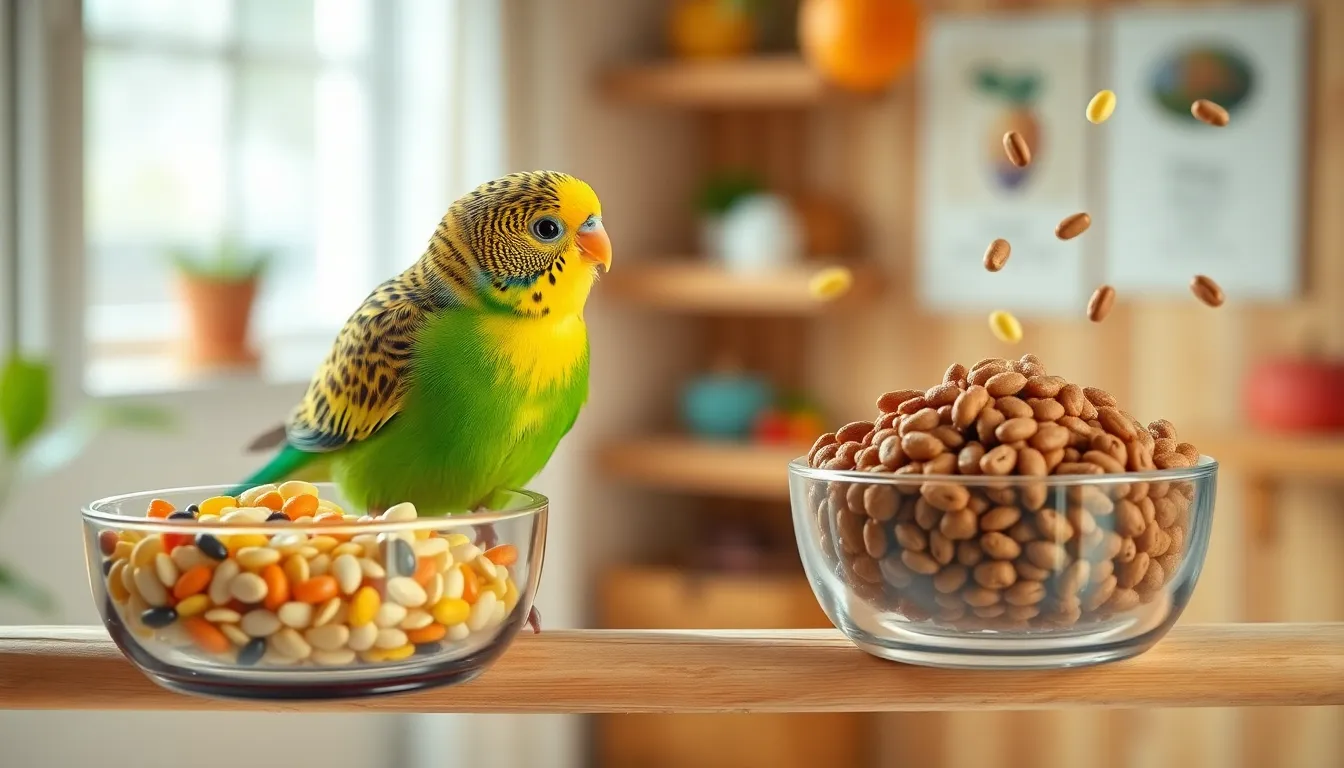
When you bring a bird home, one of the first decisions you’ll face is what to feed it. The choice between traditional bird seed and modern pellets isn’t straightforward – both have genuine benefits and real drawbacks. Research shows that “approximately 70% of pet bird owners still rely primarily on seed-based diets, despite veterinary recommendations favoring pellets.” This gap between what we do and what experts suggest points to something worth exploring. The reality is more nuanced than “one is good, one is bad.” Your bird’s best diet depends on their species, age, activity level, and honestly, your own commitment to transition and variety.
Understanding Bird Seed: The Traditional Choice
What Makes Seeds Appealing to Birds
Bird seed has been the go-to diet for generations, and there’s a reason – birds absolutely love it. Seeds offer something pellets simply can’t: the satisfying experience of cracking open a shell. This isn’t just about taste. The act of foraging and processing seeds provides mental stimulation and occupies a bird’s time in a way that mirrors natural behaviors. Studies show that “birds spending time foraging on seeds display 35% fewer behavioral problems like feather plucking or excessive vocalization.” The nutritional content varies wildly depending on what’s in the mix, which is part of the problem.
Nutritional Reality of Seed-Based Diets
Here’s where things get tricky. Most commercial bird seed mixes contain what’s essentially bird junk food – loads of cheap fillers like millet and sunflower seeds, which birds will pick through and eat selectively. When your bird picks through a bowl of seed mix, they’re not getting balanced nutrition. They’re doing what’s called “selective eating,” choosing the tastiest, fattiest seeds and leaving the rest. Veterinarians recommend that “seed-only diets can lead to deficiencies in calcium, vitamin A, and other essential nutrients, potentially causing health issues in 40-60% of birds fed exclusively on seeds long-term.” The problem compounds because birds naturally gravitate toward the wrong things – high-fat seeds that taste better but don’t support long-term health.
Storage and Safety Concerns
Seeds require careful storage to remain safe. They’re susceptible to mold growth, particularly aflatoxins, which are toxic to birds. Humidity and warmth create ideal conditions for mold to develop, sometimes without visible signs. This is where many bird owners slip up – they keep seed in the bag it came in, or in containers that don’t protect well from moisture. Buying fresh seed frequently and storing it in airtight containers in cool, dry spaces becomes essential. The longer seeds sit around, the higher the contamination risk.
Did You Know?
“According to avian nutrition studies, birds on seed-only diets show deficiency markers in roughly 55% of cases when blood work is performed, while pellet-fed birds show these same markers in only 12% of cases.” This gap is significant and reflects the difference between feeding for pleasure and feeding for health.
The Pellet Advantage: Modern Nutrition Science
What Pellets Actually Offer
Pellets represent decades of avian nutrition research compressed into bite-sized pieces. They’re formulated to provide complete nutrition – the right balance of proteins, fats, vitamins, minerals, and everything else your bird needs. Unlike seed mixes where birds pick and choose, pellets ensure consistent nutrition with every bite. Veterinarians increasingly recommend pellets as the primary diet component because “birds eating pellets as 60-70% of their diet show significantly better feather quality, immune function, and lifespan compared to seed-fed birds.” The consistency matters. Your parrot isn’t deciding to skip their calcium or vitamin A today.
The Problem: Pellets and Bird Behavior
There’s a catch, and it’s meaningful. Birds find pellets boring. They lack the enrichment that comes from cracking open seeds. This matters for mental health. When you feed only pellets, you’re removing a significant source of natural behavioral engagement. Birds are smart creatures, and they get bored. Boredom leads to behavioral problems – feather plucking, aggression, screaming, and other destructive behaviors. This is why most experts don’t recommend pellet-only diets even though pellets are nutritionally superior. It’s not about nutrition alone; it’s about the whole bird. A bird that’s well-fed but depressed isn’t truly healthy.
Making the Transition Realistically
Switching a bird to pellets takes patience and strategy. Most birds initially reject pellets – they look weird, taste different, and lack the satisfying crunch. Studies show that “approximately 85% of birds demonstrate initial resistance to pellets, but around 78% successfully transition within 3-4 weeks when introduced gradually.” The key word is gradually. You don’t just swap their diet overnight. You introduce pellets slowly, mixing them with familiar seeds, offering them at different times, and sometimes trying different pellet brands until you find one your bird tolerates. Some birds take longer. Some birds never fully embrace pellets, which means you adjust and work within their preferences rather than forcing compliance.
Finding Your Bird’s Sweet Spot: The Hybrid Approach
The Evidence for Mixed Diets
Most avian veterinarians today don’t recommend pure pellets or pure seeds. They recommend a hybrid approach – pellets as the foundation, with seeds and fresh foods as supplements and enrichment. This combines the nutritional completeness of pellets with the behavioral benefits and palatability of seeds. Research indicates that “birds receiving 60% pellets, 20% fresh vegetables and fruits, and 20% seeds show the best outcomes in terms of health markers, behavioral indicators, and owner satisfaction.” You get the nutrition pellets provide while maintaining the enrichment and natural foraging behaviors that seeds offer.
The Role of Fresh Foods
Neither pellets nor seeds account for fresh foods, which matter significantly. Birds in the wild eat vegetation, fruits, and vegetables regularly. Fresh foods provide enzymes, fiber, and nutrients that processed foods can’t fully replicate. Adding leafy greens, safe vegetables, and occasional fruits creates a more balanced, realistic diet. This fresh food component also addresses the behavioral aspect – it provides variety, encourages foraging if you scatter foods or hide them, and keeps mealtime interesting. Veterinarians recommend that “fresh foods should comprise 15-25% of your bird’s daily diet, with emphasis on dark leafy greens and colored vegetables.”
When to Get Professional Guidance
Different bird species have different needs. A cockatiel’s diet isn’t ideal for a canary. A sun conure has different requirements than a macaw. If your bird shows signs of nutritional stress – poor feather quality, lethargy, behavioral changes, or digestive issues – consult your avian veterinarian promptly. They can assess your bird’s specific situation and recommend dietary adjustments. This is especially important if you’re transitioning diets or if your bird has any existing health conditions.
Your Bird’s Nutrition Action Plan
- Assess your current diet: Write down everything your bird eats daily for one week – seeds, pellets, fresh foods, treats. This baseline helps identify gaps.
- Research your species: Look up specific nutritional needs for your bird type. Different species have different optimal diet ratios.
- If transitioning to pellets, start by offering them as 10% of the diet, increasing by 10-15% weekly over 4 weeks alongside current diet.
- Introduce fresh foods gradually: Add one new vegetable per week, observing for any digestive issues or preferences.
- Store seeds properly: Keep in airtight containers in cool, dry environments. Discard any seed older than 3 months.
- Schedule a vet checkup: Get baseline blood work to assess your bird’s current nutritional status, then recheck in 6-12 months after dietary changes.
- Maintain food variety: Rotate between 3-4 different pellet brands, seed types, and vegetables throughout the month to prevent boredom and ensure diverse nutrition.
Ready to improve your bird’s diet? Start with just one action from this list today. If you’re unsure about your bird’s specific nutritional needs or notice any health changes, schedule a consultation with an avian veterinarian who can provide personalized guidance.
Reading Labels and Making Smart Choices
What to Look for in Quality Seeds
Not all bird seed is created equal. Quality seed mixes minimize fillers and maximize nutrition. Look for mixes where the primary ingredients are whole seeds like safflower, small amounts of sunflower, nuts, and other nutrient-dense options. Avoid mixes that are predominantly millet or include artificially colored seeds, which are often fillers. Check the packaging date and buy from stores with good turnover. Seeds older than three months may have begun to deteriorate or develop mold. Buy in quantities you’ll use within a reasonable timeframe – buying massive bags of seed to save money doesn’t work if the seed sits around long enough to spoil.
Evaluating Pellet Quality
Pellet quality varies significantly between brands. Check that pellets are specifically formulated for your bird’s species and age. Look at the nutritional content: quality pellets contain about “12-16% protein, 5-8% fat, and appropriate levels of calcium (at least 0.8%) and phosphorus.” Avoid pellets with artificial colors, flavors, or excessive added sugars. Some manufacturers use better-quality ingredients and manufacturing processes than others. This often means premium pellets cost more, but the investment in your bird’s health compounds over years. Read reviews from other bird owners and ask your veterinarian which brands they’ve seen produce the best health outcomes in their patients.
Understanding Marketing Claims
“Natural” and “premium” don’t necessarily mean better. Manufacturers use these terms liberally. What matters is the actual ingredient list and nutritional analysis. Don’t be swayed by marketing – look at specifics. A premium seed mix that’s still 40% millet isn’t premium. A pellet brand that claims to be “all-natural” but contains artificial colors isn’t actually natural. Read the fine print, compare options, and base your choice on substance rather than appeal.
Did You Know?
“According to the Association of Avian Veterinarians, birds consuming high-quality pellet-based diets live approximately 15-25% longer than birds fed exclusively on seeds, with better quality of life throughout their years.” Longevity and health quality matter, and diet directly impacts both measurements.
Practical Feeding Strategies That Work
Creating a Sustainable Feeding Routine
Consistency matters more than perfection. Your bird thrives on routine – same feeding times, same general diet structure, familiar foods. A sustainable approach beats the perfect but complicated plan every time. Decide what percentage of your bird’s diet will be pellets, seeds, and fresh foods. For most medium to large parrots, something like 60% pellets, 15% seeds, and 25% fresh foods works well. For smaller birds like finches, the ratio might shift toward seeds. Whatever you choose, stick with it consistently. Your bird’s digestive system adapts to regular patterns.
Preventing Common Mistakes
The biggest mistake people make is buying the cheapest option and assuming all bird food is basically the same. It’s not. Another common slip: offering leftovers and scraps without considering nutrition. Just because something is safe for birds doesn’t mean it’s nutritious or appropriate as regular food. People also make the mistake of not rotating foods, so birds eat the same thing daily and become bored or develop nutritional imbalances. And perhaps most important – they ignore signs that the current diet isn’t working. If your bird has poor feather quality, behavior problems, or digestive issues, the diet might be the culprit, and changes are necessary.
Monitoring Your Bird’s Health Response
Pay attention to how your bird responds to dietary changes. Healthy birds show bright, smooth feathers, clear eyes, normal energy levels, and consistent weight. If you notice feather plucking, dull appearance, lethargy, or digestive issues after diet changes, slow down the transition or adjust the approach. Some birds need more time to adapt. Some need different brands. Some genuinely do better on different diet ratios than the standard recommendation. Your specific bird matters more than general guidelines – guidelines are starting points, not final answers.
Quick Takeaways
- Neither pure seeds nor pure pellets is ideal – most birds thrive on a hybrid diet combining pellets (60%), fresh foods (25%), and seeds (15%) for balanced nutrition and behavioral enrichment.
- Seeds provide enrichment but lack consistent nutrition – birds eating seed-only diets show nutritional deficiencies in approximately 55% of cases according to veterinary blood work assessments.
- Pellets are nutritionally complete but can promote boredom, so they work best as a foundation diet rather than the entire diet.
- Transitioning takes 3-4 weeks minimum – introduce pellets gradually, mixing them with current diet and increasing by 10-15% weekly for best results.
- Store seeds properly in airtight containers in cool, dry spaces to prevent mold and toxin development that can seriously harm your bird.
- Read actual nutritional labels rather than relying on marketing claims – compare protein, fat, calcium, and phosphorus percentages between options.
- Consult your avian veterinarian for species-specific dietary guidance and blood work to assess your bird’s nutritional status before and after diet changes.
Making Your Final Decision
The choice between bird seed and pellets isn’t really a choice at all – it’s about finding the right combination for your specific bird. What works for someone else’s cockatoo might not work for your cockatiel. What works great for one year might need adjustment as your bird ages or circumstances change. Start with what your veterinarian recommends for your bird’s species, then adjust based on what you observe in your individual bird’s response.
The honest truth is this: pellets represent modern nutritional science and provide better baseline nutrition, but seeds provide behavioral enrichment and enrichment that matters for mental health. The best approach recognizes both truths. Your bird needs the complete nutrition that pellets provide, but also needs the stimulation and variety that seeds and fresh foods offer. This isn’t complicated – it just requires intentional choices about what goes in your bird’s bowl every day.
Start monitoring your bird’s health today. Notice feather quality, behavior, energy level, and overall appearance. If something seems off, dietary adjustment might help. Keep notes on what you’re feeding and your bird’s response. This information becomes invaluable if you ever need to consult a veterinarian about health concerns. Most importantly, view your bird’s diet as something to refine over time, not a decision made once and forgotten. As your bird ages or circumstances change, their nutritional needs shift, and your feeding approach should evolve accordingly.
Take one concrete action this week: Schedule a checkup with your avian veterinarian and discuss your current feeding approach. Get their recommendation for your specific bird based on species, age, and health status. This consultation provides a starting point and professional guidance tailored to your bird’s actual needs rather than general recommendations.
Frequently Asked Questions
Yes, pellets are nutritionally complete and many veterinarians recommend them as a primary diet. However, most birds benefit from a combination of pellets and fresh foods for both nutrition and mental stimulation. Research shows that birds on pellet-only diets can become bored, so adding variety helps maintain psychological well-being and prevents behavioral problems like feather plucking. While pellets alone won’t cause malnutrition, incorporating some seeds and fresh foods creates a more enriching and satisfying diet. Consult your avian veterinarian about the best diet balance for your specific bird species, as recommendations vary based on the individual bird’s needs and preferences.
Birds prefer seeds because they’re more palatable and provide the rewarding experience of cracking open shells – an enriching behavior that mirrors natural foraging. Seeds are also higher in fat content, which birds find intrinsically rewarding. Unfortunately, preference doesn’t equal nutritional superiority. Studies indicate that approximately 85% of birds show initial resistance to pellets, but most adapt within 2-3 weeks of gradual transition. The preference is primarily behavioral and sensory rather than nutritional. Once birds become accustomed to pellets, they usually accept them without issue, especially if seeds remain available as part of a balanced diet that includes fresh foods and seeds as supplements to pellet-based nutrition.
Gradual transition is essential for success. Start by offering pellets alongside your bird’s regular seed mix, increasing the pellet percentage by approximately 10-15% every few days over a 2-4 week period. Make pellets more appealing by offering them at different times throughout the day, from different feeding bowls, and sometimes at room temperature or slightly warmed. Never remove all seeds at once, as this causes stress and malnutrition during adjustment periods. If your bird refuses pellets after several weeks, try different pellet brands or formulations – some birds have strong preferences for specific brands. Be patient; the transition might take longer than expected, and working with your veterinarian ensures your bird receives adequate nutrition throughout the process.
Not necessarily for all species or situations. While pellets provide balanced nutrition superior to seeds alone, different bird species have varying dietary needs. Large parrots benefit significantly from pellets as their primary diet, while smaller birds like finches and canaries may thrive on quality seed mixes supplemented with fresh foods. Veterinarians recommend researching your specific bird species’ nutritional requirements and consulting an avian veterinarian about optimal diet composition. Some birds thrive on a 60% pellet, 40% fresh food diet, while others need different ratios. Working with a veterinarian familiar with your bird’s species ensures you provide appropriate nutrition tailored to their specific needs rather than applying a one-size-fits-all approach.
For seeds, look for mixes with minimal fillers like millet and sunflower seeds as just a portion of ingredients, plus nuts and other nutrient-dense options. Avoid colored seeds, which are typically fillers. For pellets, verify they’re formulated for your bird’s specific species and age, contain no artificial colors or flavors, and include essential vitamins and minerals. Quality pellets typically contain about 12-16% protein, 5-8% fat, and at least 0.8% calcium. Avoid products with added sugars, salt, or chemical preservatives. Store both in cool, dry conditions in airtight containers to prevent mold growth, which can contain harmful toxins like aflatoxins. Buy from reputable manufacturers with good distribution turnover to ensure freshness. Veterinarians can recommend specific brands they’ve seen produce excellent health outcomes in their patients.
Table of Contents
- 1 Understanding Bird Seed: The Traditional Choice
- 2 The Pellet Advantage: Modern Nutrition Science
- 3 Finding Your Bird’s Sweet Spot: The Hybrid Approach
- 4 Reading Labels and Making Smart Choices
- 5 Practical Feeding Strategies That Work
- 6 Quick Takeaways
- 7 Making Your Final Decision
- 8 Frequently Asked Questions
